Disclosure: As an Amazon Associate I earn from qualifying purchases. If you buy through the link below, it costs you nothing extra and helps support this site.

If you’ve ever felt at the mercy of your own moods, there’s a skill set that can change that, and it’s teachable. This is the book therapists reach for more than any other to teach it. That reputation is earned.
What this book is about
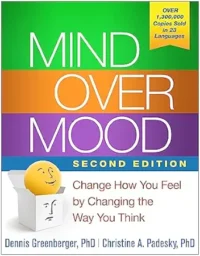
Dennis Greenberger and Christine Padesky, with a foreword by Aaron Beck, put the core of cognitive therapy into a workable, step-by-step form. The central idea is that thoughts, feelings, and actions are linked, and that learning to work with your thoughts gives you a handle on the feelings that used to feel out of reach.
Who this book may help
It fits a wide range of readers, including if you:
- Feel controlled by anxiety, low mood, anger, or guilt
- Want the single method most therapists actually teach
- Like clear worksheets you can repeat as your situation changes
- Want one book that works across several kinds of distress
Key tools in the book
The heart of it is the thought record, where you catch a strong feeling, find the thought driving it, and weigh the evidence for and against. You’ll also build action plans, track your mood over time, and practice new responses until they start to feel like your own.
Clinical strengths
This is as close to a gold standard as self-help gets. It’s used in clinics and training programs around the world, and the exercises hold up because they’re the real thing, not a simplified imitation. Work it steadily and the skills carry over to almost anything life hands you.
Limitations
Because it covers so much ground, it’s less tailored than a book aimed at one specific problem. And like any workbook, it rewards consistency and gives little to a quick skim. It isn’t therapy. If your symptoms are severe, or you’re feeling hopeless, please bring a professional into the picture.
My recommendation
This is the book I point to when someone wants to understand how cognitive therapy actually works, because it teaches the method from the inside. Read it with a pen, do the thought records even when they feel awkward, and give the skills a few weeks to take root. Most people are surprised how far they get.
This review is for general education and isn’t a substitute for professional care. If you’re struggling, a licensed mental health professional can help you find the right next step.
Dr. Joseph S. Weiss is a psychologist in Seattle, WA. He works with people dealing with anxiety, OCD, panic, insomnia, and phobias, drawing on CBT, EMDR, and other approaches with strong research behind them. What keeps him in this work is watching people get their lives back, one small step at a time.