Disclosure: As an Amazon Associate I earn from qualifying purchases. If you buy through the link below, it costs you nothing extra and helps support this site.
A lot of people believe their anxiety is just how they’re wired, fixed for life.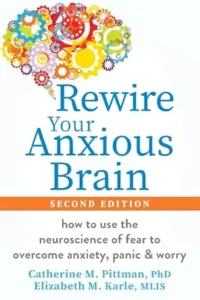 That belief keeps them stuck. The brain that learned to be anxious can also learn something calmer, and this book walks you through how that happens.
What this book is about
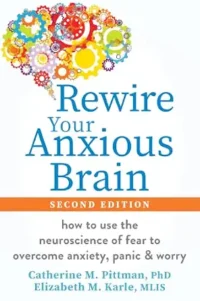
Catherine Pittman, a neuroscientist and clinical psychologist, teams up with Elizabeth Karle to explain fear through two pathways in the brain. One runs through the amygdala, which reacts fast and floods the body before you can think. The other runs through the cortex, the home of worry and what-if thinking.
Once you can tell which pathway is driving a given moment, you know which tools to reach for. That’s the whole idea, and it’s a useful one.
Who this book may help
You may get a lot out of it if you recognize yourself here:
- Your anxiety shows up as sudden physical panic you can’t reason your way out of
- You get stuck in long loops of what-if thinking
- You want to understand why symptoms happen, not just push them down
- You find plain, honest neuroscience calming rather than alarming
Key tools in the book
For the amygdala, Pittman and Karle teach slow breathing, relaxation, and gradual exposure that helps the brain form new, less fearful associations. For the cortex, they show you how to catch anxious thoughts and answer them. There’s practical material on how sleep, exercise, and steady avoidance quietly shape the fear response over months and years.
Clinical strengths
The two-pathway model is simple without being watered down. Naming the mechanism helps people stop blaming themselves for reactions they never chose. The science holds up, and the exposure work pairs well with what happens in therapy.
Limitations
The book leans toward teaching, so if you want a day-by-day worksheet program you’ll want to add one alongside it. And reading, on its own, isn’t treatment. If your anxiety is severe, if panic is shrinking your world, or if you’re having thoughts of harming yourself, please reach out to a professional instead of going it alone.
My recommendation
I often suggest this one to clients who want to understand their own brain before they start changing it. The ideas tend to stick faster when you pair them with real practice, which is what structured anxiety treatment is built to give you. Read it with a pen in hand, try one tool at a time, and notice what shifts.
View Rewire Your Anxious Brain on Amazon
This review is for general education and isn’t a substitute for professional care. If you’re struggling, a licensed mental health professional can help you find the right next step.
Dr. Joseph S. Weiss is a psychologist in Seattle, WA. He works with people dealing with anxiety, OCD, panic, insomnia, and phobias, drawing on CBT, EMDR, and other approaches with strong research behind them. He’s convinced that almost no one is as stuck as they feel, and that the right tools, used patiently, almost always make a difference.